
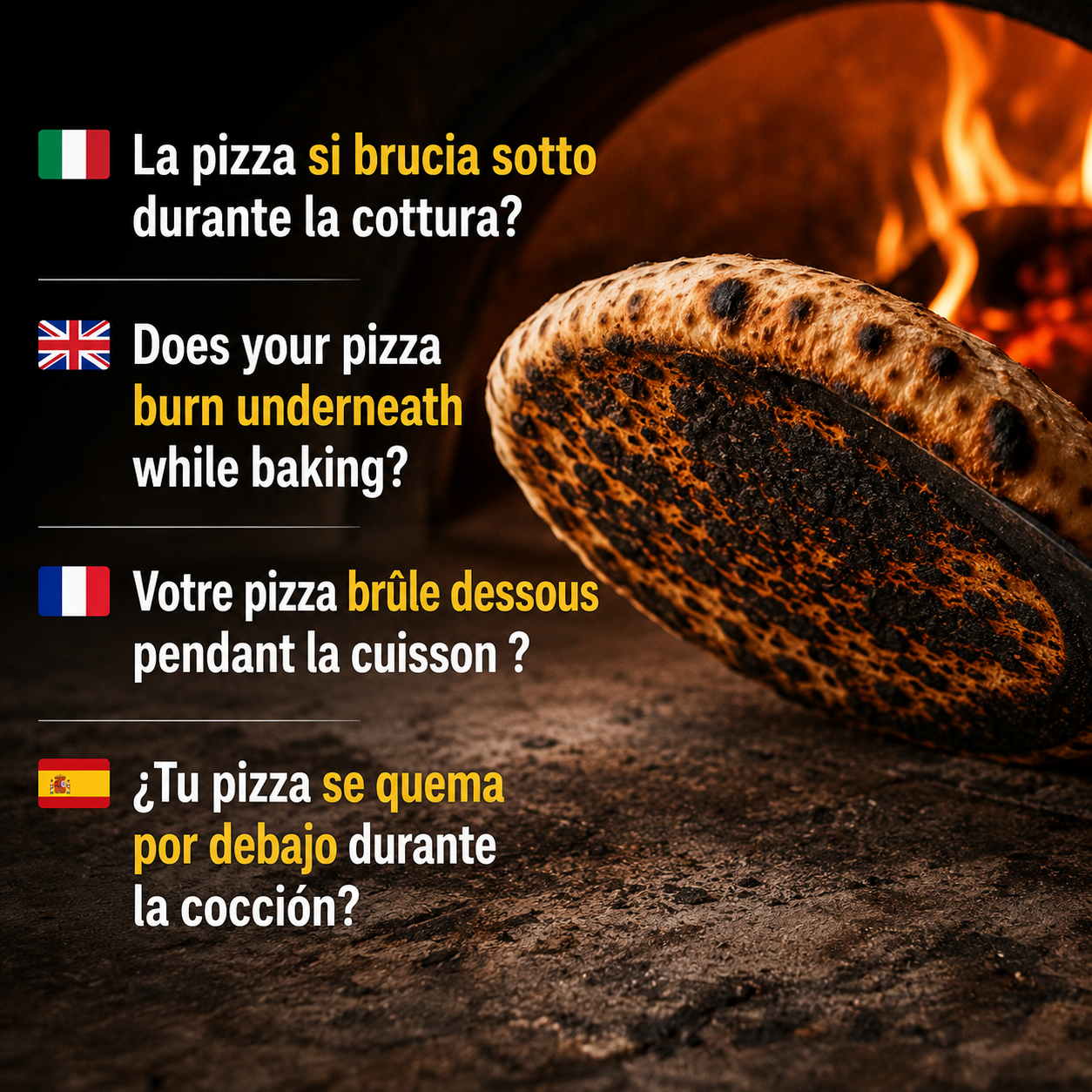
Does your pizza burn underneath while baking?
If the bottom becomes too dark or carbonises while the rest of the pizza looks right, it does not automatically mean the whole oven is too hot. First understand what is burning and how heat reaches the pizza.
First: what is actually burning?
A uniformly dark bottom often suggests excessive heat transfer from the baking surface. Small black spots and bitterness may instead come from burnt flour or semolina. If the bottom burns while the top stays pale, the most useful clue is an imbalance between bottom and top heat.
The baking surface and thermal inertia
Stone and baking boards do not instantly follow every oven adjustment. They store energy: this is thermal inertia. The first pizzas may be perfect, then the oven runs too hot. You reduce flame or power and the displayed temperature falls, while the baking surface can remain excessively hot. Turning the oven down does not mean the stone has already cooled.
Flour, semolina and dough-ball moisture
Dusting flour left under the pizza touches the hot surface directly and can carbonise quickly. Surface moisture matters especially because a wet or sticky dough ball often requires more flour or semolina during stretching and launching. Hydration, fermentation and moisture loss during final proof also affect how the bottom dries and colours.
What to do
1. Measure the baking surface, not only the display. Use an IR thermometer at the spot where the pizza will bake. There is no universal target: oven, deck material, pizza style and baking time all matter.
2. Give an overheated stone time to cool. Reducing flame or power is not instant cooling; wait and measure again.
3. Reduce excess dusting flour. Use what you need, then remove the excess before launching. If the dough always needs a lot, review surface moisture and final-proof management.
4. Keep the surface clean. Carbonised residues can stick to later pizzas and keep burning.
5. Read top and bottom together. A burnt bottom with a pale top points to too much bottom heat relative to top heat. Rebalance independently controlled elements where possible; otherwise adjust position, flame, recovery and timing.
6. Consider the dough. Added sugars, enzymatic activity, hydration and fermentation state can change browning speed.
During multiple consecutive pizzas
The surface is not always too hot. During rapid consecutive bakes it can also lose stored energy and become progressively cooler. Learning how your baking surface stores, releases and recovers heat is key to consistent results.
The Pizzood rule
If the pizza burns underneath, do not automatically lower the whole oven. Observe the bottom, measure the real baking-surface temperature and distinguish an overheated deck from burnt dusting flour, dough moisture, residues or a top/bottom heat imbalance. Fix the cause, not just the number on the display.